- Home
- Knowledge Center
- india-us-trade-deal-2026
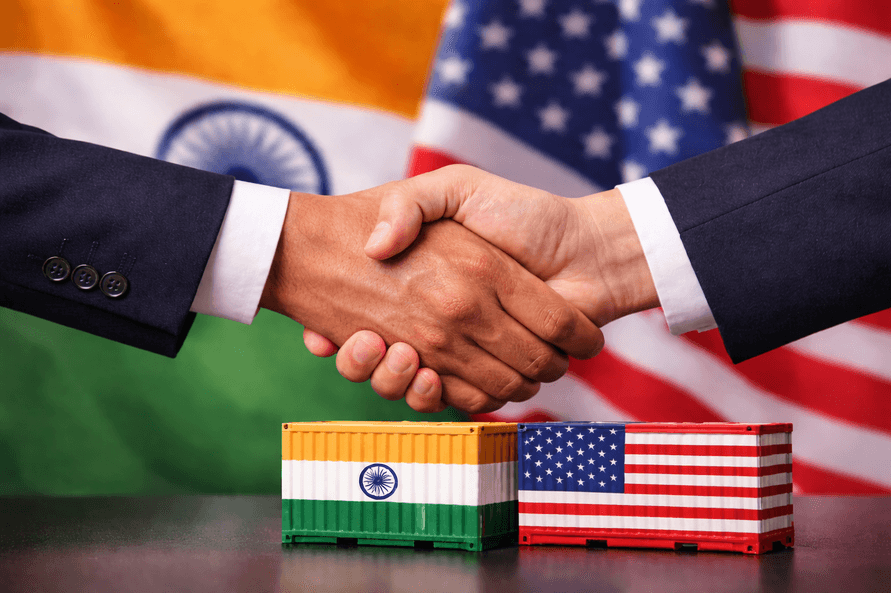

Table of Contents
- What actually happened?
- Why is this as much political as it is economic?
- What led the US to make this deal now?
- How does this change India economically?
- How does this matter geostrategically?
- Why is India muted about a no-imports-from-Russia commitment?
- Is a larger FTA still in process?
- Sector-by-sector quick hits
- Risks, wrinkles, and why not everyone is cheering
- Where this leaves the global trading system
- Conclusion
Imagine two neighbors who have been squabbling over fence posts and garden produce for years. One neighbour suddenly needs fruit from the other because their own orchard had a frost. The other neighbour, sensing opportunity, offers to open the gate wider if the first neighbor promises to stop buying fruit from a third neighbor across town who’s been a political problem for the first.
That picture is a useful way to think about what happened between India and the United States yesterday: a pragmatic bargain, a little geopolitics thrown in, and a lot of economic hope.
What actually happened?
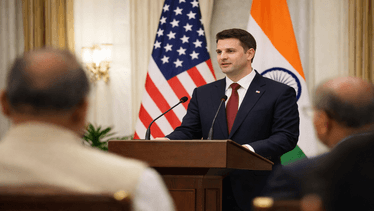
On February 2, 2026, US President Donald Trump announced a trade package with India that cuts reciprocal US tariffs on Indian goods to about 18% from much higher levels of 50% the US had been applying.
As part of the political framing of the announcement, the US said India would halt purchases of Russian oil, and both sides signalled expanded market access and lower trade barriers.
Markets reacted quickly: Indian stocks and the rupee jumped, reflecting immediate investor relief.
Why is this as much political as it is economic?
This deal sits at the intersection of trade policy and geopolitics.
The US had slapped punitive tariff measures on India last year after alleging that India’s purchases of discounted Russian oil were indirectly funding Russia’s war in Europe.
For the US, getting India to meaningfully reduce or stop those purchases helps that geopolitical aim.
For India, the tariff rollback is a major near-term economic win that soothes exporters and financial markets.
What led the US to make this deal now?
1. US domestic politics and leverage. The US used tariffs as leverage to change behavior it saw as counter to its strategic goals.
2. Market timing. The US benefits politically and economically when emerging-market instability calms.
3. Competitive trade dynamics. India recently concluded a big FTA with the European Union, which reshaped bargaining power.
How does this change India economically?
Expect a rapid financial market response and some sector winners.
Lower tariffs boost competitiveness of Indian exporters to the US.
Foreign investor sentiment improves because one big source of political risk has been muted by the deal.
That said, tariff cuts alone do not rewrite supply chains overnight.
How does this matter geostrategically?
India has for years tried to balance strategic autonomy with deeper ties to the West.
Accepting a quid pro quo that affects energy purchases is a substantive shift in behavior.
Strategically, the US wins a partner visibly distancing itself from Russian energy; India secures market access and political goodwill.
Why is India muted about a no-imports-from-Russia commitment?
1. Energy security realities. India’s economy still needs reliable energy at affordable prices.
2. Domestic politics and diplomatic balance. India maintains important strategic, defense, and historical ties with Russia.
3. Flexibility. Staying noncommittal gives New Delhi wiggle room.
Is a larger FTA still in process?
Yes. Officials have said a comprehensive bilateral free trade agreement will take more time.
The pact announced looks like a near-term package; the broader FTA remains under negotiation.
Sector-by-sector quick hits
IT and software services — goodwill and lower friction are positives.
Manufacturing and auto components — lower US tariffs can help competitiveness.
Energy and petroleum — import patterns may shift.
Agriculture and consumer goods — gains may be phased rather than instant.
Risks, wrinkles, and why not everyone is cheering
Enforcement and timelines matter.
Domestic resistance in India could slow commitments.
The Russia factor could re-emerge later.
Where this leaves the global trading system
Trade policy is drifting toward bilateral, geopolitically shaped bargains.
India is playing multiple lanes at once, which can be smart hedging but also creates complexity.
Conclusion
Yesterday’s pact looks like a tactical win for both sides.
Real effects will depend on implementation and political follow-through.
The ending is not written yet.
Explore Categories
Related Posts
Discover more insights and expert advice on investing and financial planning.



Open Your Free Demat Account
Getting started doesn’t take much. No paperwork, no hidden charges. Just a few steps and you’re ready to invest or trade.
Account Today
No paperwork | No hidden fees | Just a few taps to get started.